We have, for many years now, supplied both reclaimed and new roof tiles for projects all over the United States. In most cases the Architect and or Home Owner has an aesthtic look in mind and we can supply the right solution in terms of colors, barrel or Roman Pan, flat tile, ridge tiles etc.
We now have been comissioned by an Architectural Firm to find a solution to a particular design requirement of theirs - They are looking to recreate the terracotta rooftiles used on Greek Stoas. The Stoa (or Colonnade) was a common building type found in ancient Greece and many had a flat pan (also known now as a "Roman Pan") with an angled "barrel cap" between the pans. Some Images can be seen here .
So armed with some sketches and photos from books

we contacted our Italian suppliers to see if they could help us. They came up with a number of drawings and solutions and then made some mockups with various color clays and finishes, and Alessio, together with the Architect visited the factory in Italy just before Christmas to inspect the various options:
The first decision is color and finish and a number of mockups are prepared

The next issue is the cap and the very particular bird stop that, in the case of Greek Stoas has the formal name of antefix. A bird stop is exactly that, a tile (or some form of barrier, in some cases wire mesh, in others a trowelfull of mortar) that is applied at the end of the barrel caps. This is to prevent birds from nesting inside the roof tile! Greek Antefix's can be very decorative affairs and we have begun exploring possible design solutions
.jpg)
.jpg)
This, we hope, will prove to be a very interesting project.
Today we announced that we have started the process to have our Bronze and Steel windows and doors NFRC certified.
You can see the Press Release here:
http://www.cooritalia.com/press/2011/11/22/cooritalia-begins-nfrc-certification-steel-and-bro/
What does NFRC Certification mean? As we said in the Press release the NFRC (National Fenestration Rating Council) is a non-profit organization, which administers the only uniform, independent rating and labeling system for the energy performance of windows, doors, skylights, and attachment products. NFRC Certification is a standard against which fenestration products can be compared in terms of energy efficiency.
What it means to the consumer is that there is a single organization (and thus database) that tests windows and doors and verifies what their performance is when it comes to energy conservation. The look at things like how much heat is transferred through the frame and the glass (known in the business as U-value). The lower the U-value the more energy efficient the window and door is.
There are many factors that affect the Uvalue of a unit, but it basically comes down to two main factors - the frame and the glass. There are an infinite amount of glazing choices for a home owner, from the simple single pane untreated glass with very high U-value to triple pane IG units (Insulated Glass) with heat mirrors, krypton filled and "low-e" treated surfaces which have very low u-values. Then there is everything in-between. Your best choice between cost and performance is usually a dual pane "low-e" unit that is air filled. You can, for a small price surcharge add Argon or Krypton to the glass for better performance. Another aspect to consider (and that the NFRC tests) is Solar Heat Gain Coefficient (SHGC). This measures how much of the sun's rays are converted to heat inside of the room. In this case there is no "good" or "bad" value as in winter you want to heat the house but might not want to do so in the summer. Many "Passive Houses" use SHGC to great advantage to reduce their energy footprint.
When it comes to how the frame affects the u-value of the overall unit it comes as no surprise that traditionally Metal windows have always fared poorly compared to their wood and vinyl counterparts, and therefore Steel and Bronze window manufacturers have steered away from certifying their products with the NFRC. But this is where CoorItalia feels there is a big opportunity: Our windows and doors are made with latest technology profiles that are thermally broken. This means that the bronze (or steel) that is outside of the building, is separated from the bronze (or steel) from the inside by a highly insulted rigid material (made of a high density polyurethane resin).
.jpg)
It is thanks to this thermal break that we expect to have industry leading values amongst metal windows and doors opening up a whole new aesthetic option for Architects and Home Owners that want to beauty and durability of bronze and steel without compromising energy efficiency. Furthermore, whereas many other Steel and Bronze window manufacturers will certify one or two units we are certifying casement windows, both inswing and outswing, fixed windows, doors and even Lift & Slide doors.
Hopefully we will have more news for you in late winter early spring when all the tests and simulations are completed!
This was a highly complex project - the Architectural firm BAR had designed an elliptical cantilevered staircase in wired brushed Portuguese limestone called Alhambra. CoorItalia worked with the architects and General Contractor in the USA first, to come up with the templates for each one of the stairs - treads and risers, and with the laboratory in Italy to come up with the Shop Drawings. These steps were then manufactured in near Carrara, in Italy, assembled in mockups, disassembled and shipped to the job site for final staircase installation.

The end result is spectacular - a true example of the staircase as a lifting focal point in a home. But the triumph was also in taking exacting design and construction requirements (the tolerances for the treads to fit over the cantilevered rods were extremely tight) and making everything just fit perfectly.

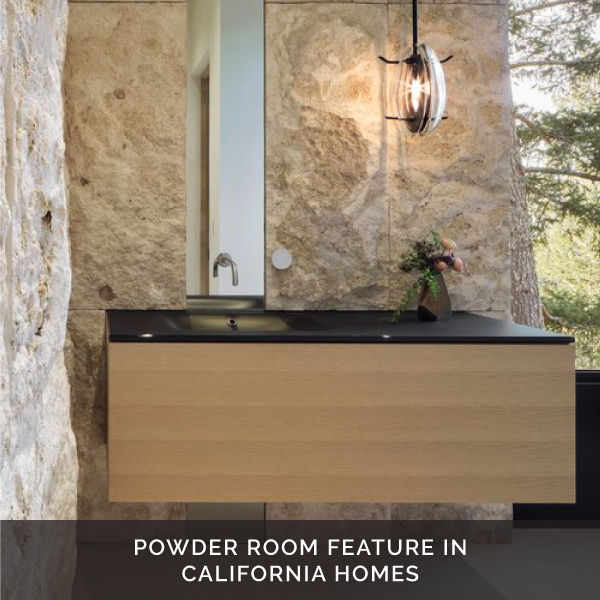
For the same project we produced in the same Alhambra limestone, cut to size floor tiles, two fireplaces and a solid sink for the powder room.